
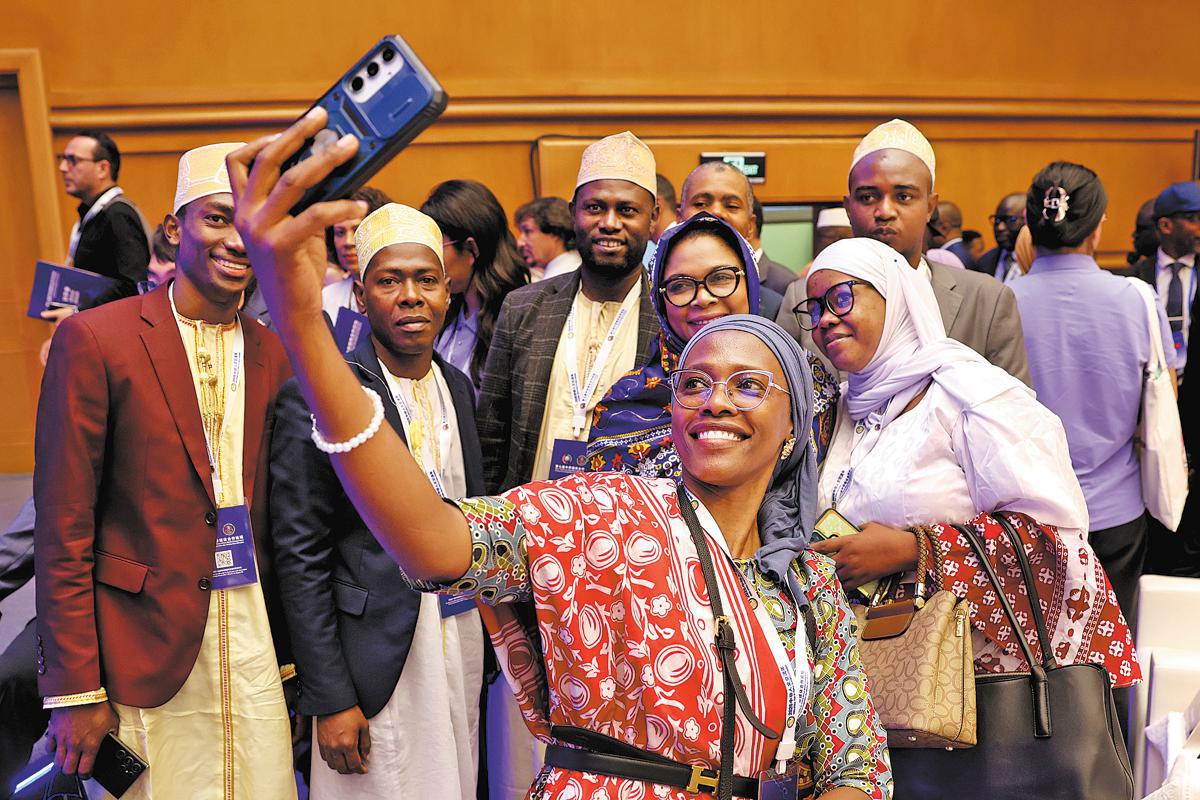
Participants pose for a group photo during the 7th Forum on China-Africa Media Cooperation in Beijing on Thursday. The event runs through Friday. WANG ZHUANGFEI/CHINA DAILY
African officials and media leaders called on Thursday for China-Africa media cooperation to move beyond equipment support and program exchanges toward coproduction and two-way storytelling, in order to help the African media better narrate their own stories and bring a wider African perspective to Chinese audiences.
They made the remarks as the 7th Forum on China-Africa Media Cooperation opened in Beijing, bringing together about 400 government, media, diplomatic, business and academic representatives from China and 45 African countries.
The three-day forum is being held as China and Africa mark 70 years of launching diplomatic relations in 2026 and observe the China-Africa Year of People-to-People Exchanges.
Alhaji Mohamed Sarjoh Bah, the African Union's permanent representative to China, described the media as a strategic tool for development, cultural identity and economic opportunity, as well as a major force shaping international perception. He emphasized that Africa should not remain a passive recipient of information, and should instead become a producer and distributor of knowledge and ideas.
He urged cooperation beyond content exchanges in film, broadcasting, animation, gaming and digital content to create value chains that generate employment and attract investment.
Ahunna Eziakonwa, United Nations undersecretary-general and special adviser on Africa, made a video address to the forum in which she described storytelling as an essential tool for development.
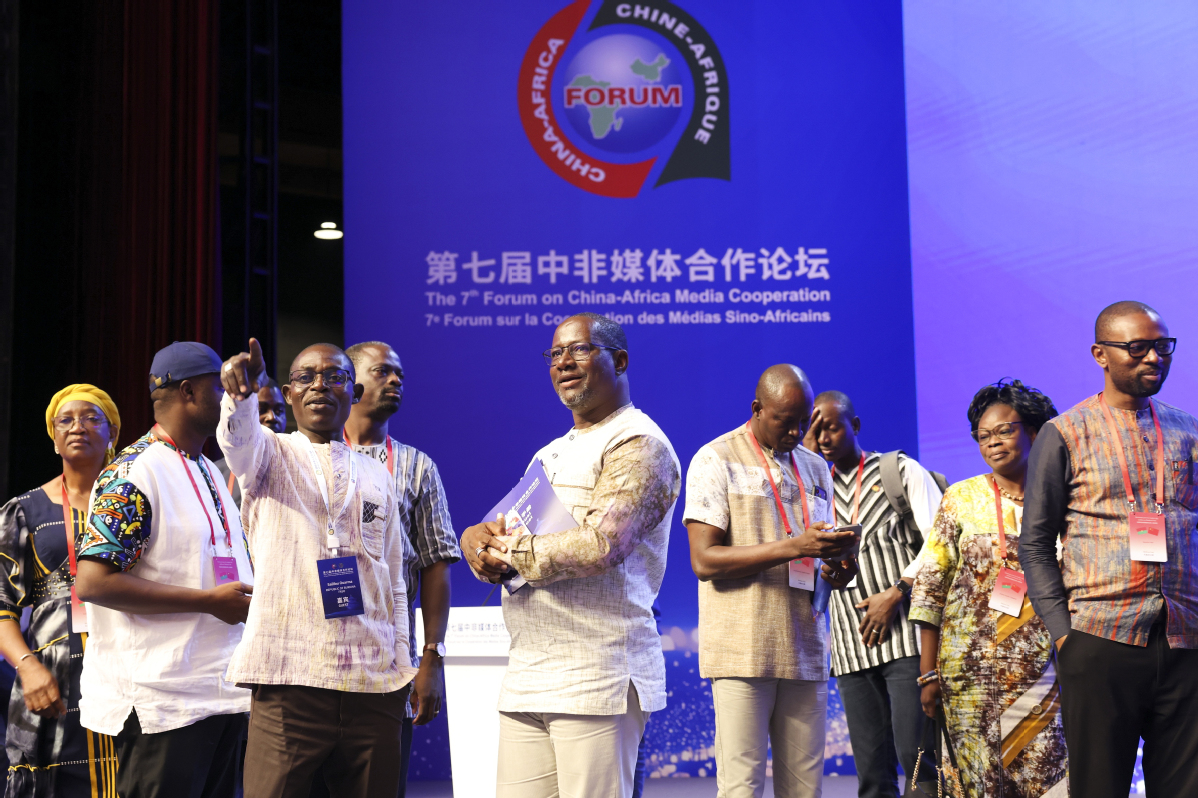
Guests participating in the 7th Forum on China-Africa Media Cooperation engage in discussions after the forum's opening ceremony on Thursday in Beijing. WANG ZHUANGFEI/CHINA DAILY
External narratives have long obscured African realities, but young African creators are changing that through streaming, animation and digital content, Eziakonwa said, adding that Sino-African joint productions, along with technologies adapted to African languages and contexts, could strengthen the continent's narrative sovereignty.
Gregoire Ndjaka, director-general of the African Union of Broadcasting, underscored that cooperation between Africa and China should promote an exchange of stories, voices, ideas and experiences.
Ndjaka noted Chinese support for African broadcasting and the provision of news, documentaries and other programs on AUBVision, the union's content-sharing platform, but emphasized that African content should receive greater exposure on Chinese platforms, giving Chinese audiences more opportunities to understand the continent from an African perspective.
Evelyne Butoyi, communication and media minister of Burundi, which currently chairs the African Union, said Africa-China cooperation has improved grassroots access to information and cultural content. She cited the China-aided "Access to Satellite TV for 10,000 African Villages" project, which has provided transmission equipment to 500 villages in Burundi and extended digital television coverage in remote areas.
Cao Shumin, deputy head of the Publicity Department of the Communist Party of China Central Committee and head of the National Radio and Television Administration, highlighted the scale of China-Africa media cooperation.
Over the past two years, more than 80 Chinese productions have aired in Africa, while over 80 programs from 29 African countries have been shown on major Chinese television channels and streaming platforms, Cao said.
The two sides have coproduced about 50 audiovisual programs, while China has organized 45 training programs for more than 1,000 media professionals from 32 African countries, she added.
On Thursday, the forum also unveiled 80 practical cooperation projects and issued a joint declaration calling for deeper collaboration in content production, digital transformation and AI governance.
Reviewer 1: Huang Mengyao
Reviewer 2: Zhang Yanlan
Reviewer 3: Tang Caihong